


Who We Are
Our service is delivered in a variety of ways. We work together with families, colleagues, and children and young people to support best outcomes for speech, language, communication and swallowing.
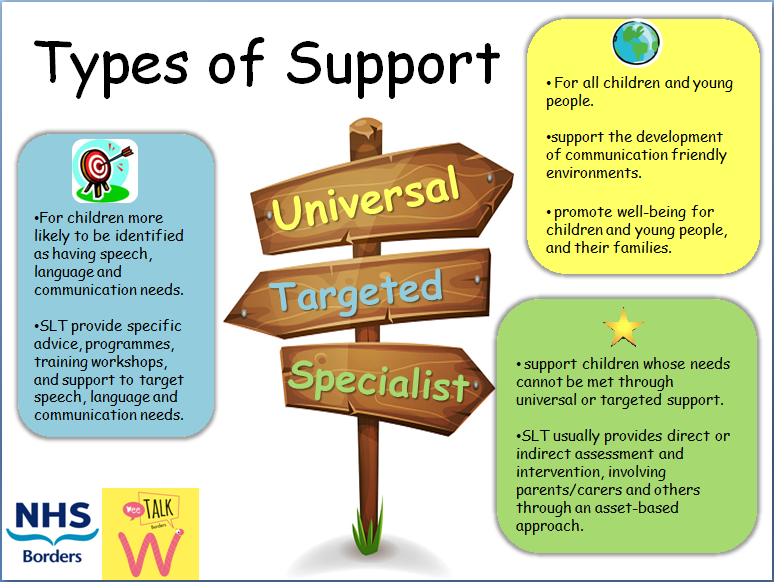
Wee Talk Borders Toolkit
Augmentative and Alternative Communication (AAC)
AAC is a term used to describe various methods of communication that can help people who are unable or less able to use verbal speech to communicate. Your Speech and Language Therapist can give you advice on which methods of AAC may be most helpful and support you in adapting AAC to suit your child:
This video playlist from Worcestershire Speech and Language Therapy features short, instructional videos on Modelling AAC, Using AAC to Support Children with Routines and more.
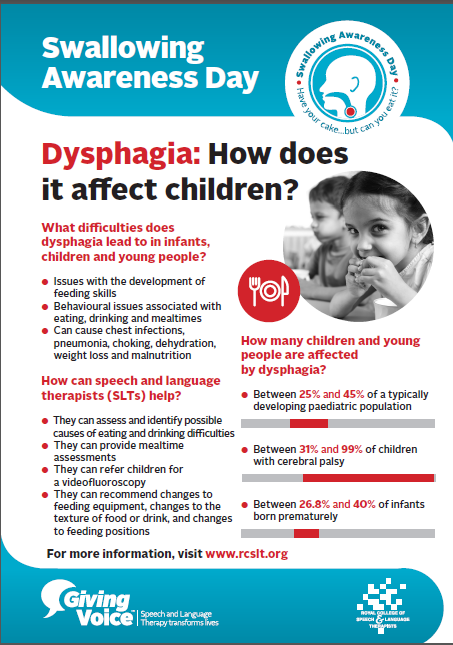
Eating, Drinking, and Swallowing
Children can experience difficulties with eating, drinking and swallowing at various times throughout their development. You should seek advice as soon as possible if you have concerns about your child’s eating, drinking or swallowing:
English as an Additional Language (EAL)
Bilingualism is an advantage in lots of ways and does not cause or contribtue to speech, language or communciation disorder. Here are some resoucres to support children learning English as an additional language:
Listening and Attention
Some children find it hard to listen and concentrate at the level expected for their age. Difficulties with attention and listening have an effect on all areas of learning: if a child struggles to listen and attend, they will be less able to process what they hear, read or see.
This section includes resources and advice to support the your child’s attention and listening skills:
- WTB Attention and Listening Stages & Strategies Information Pack
- WTB Classroom Strategies to Help Support Attention and Listening
- WTB Early Interaction Ideas
- WTB Listening and Attention Activities in the Home
- WTB Listening Games
- WTB Top Tips for Listening
Play and Social Skills
Play is crucial for children’s speech and language development. Even when playing silently, children are learning important information that will help them develop social and communication skills later on.
Here is some advice on how to use play to support your child’s development:
- WTB Playing with Your Baby
- WTB Play in the Under 5s
- WTB Ideas for Messy Play
- WTB Tips for Messy Play
- WTB Tea Set Play
Speech
Some children may not be able to use one sound or a number of sounds in their speech (speech sound difficulties), others find it diffiuclt to co-ordinate their lip and tongue movements in the ways required to produce words (oro-motor difficulties). Speech diffiuclties can impact a child’s ability to make themselves understood and the development of reading and writing skills.
Below are some resources and advice to support the development of speech sound and oro-motor skills:
- WTB Activities for Helping Speech and Sound Awareness
- WTB Listening to Sounds
- WTB Sound Games Using Pictures
- WTB Tips for Generalising Speech Sounds
- WTB Tips for Helping Your Child’s Speech Clarity
Stuttering/Stammering
Stammering, also known as stutttering or dysfluency, is a relatively common speech problem in childhood. Stammering can persist into adulthood but treatment is often successful in preschool-age children so it’s important to be referred to a specialist as soon as possible.
If you notice any of the following features in your child’s speech, please seek advice from Speech & Language Therapy:
- repeating sounds or syllables – for example, saying “mu-mu-mu-mummy”
- making sounds longer – for example, “mmmmmmummy”
- words ‘getting stuck’ or not coming out at all
If your child stammers, the advice and resources below can help you support them:
Understanding Language
Some children find it diffiuclt to understand spoken language. These children often have difficulty following instructions and learning new words and ideas. Changing the way information is presented and allowing extra time to process what is being said can help.
Here are some resources to help you support your child’s understranding of language:
- WTB Developing Concepts
- WTB Understanding 2 Key Words
- WTB Understanding 3 Key Words
- WTB Comprehension or Receptive Language Difficulties
- WTB Comprehension Difficulties – Supporting a Child in Class
Using Spoken Language
Some children find it difficult to express themselves using spoken language. These children may have difficulties with some or all of the following: putting words together to make sentences, using accurate word endings (e.g. tenses and plurals), and sequencing ideas to make a story. You may also notice that they have a limited vocabulary.
This section includes resources and advice to support the development of spoken language skills:
- WTB Talking with Your Baby
- WTB Talking with Your Baby: 0-3 Months
- WTB Talking with Your Baby: 3-6 Months
- WTB Talking with Your Baby: 6-12 Months
- WTB Talking with Your Baby: 12-18 Months
- WTB Talking with Your Baby: 18-24 Months
- WTB Early Language: Under 5s Generalised Advice
- WTB Activities to Develop First Words
- WTB Activities to Expand Vocabulary
- WTB Combining Words and Saying Phrases
- WTB Sentences: General Advice
FREE Printable Resources
Here you’ll find advice sheets, visual supports, and other resources which will help you support your child’s speech and language development. These can be printed off and used at home, in school, or anywhere your child may need them:
- WTB Basic Emotions Strip
- WTB Behaviour Chart
- WTB Good Behaviour Symbols
- WTB Lanyard Quick Reference Symbols
- WTB Complex Core Vocab – with Pages
- WTB Getting Ready for the Day Ahead
- WTB Plan for My Day
- WTB Schedule for Today – with Now and Next Board
- WTB Going to the Dentist
- WTB Going to the Hairdresser
- WTB Journey Planner
- WTB Morning and Night Routines
- WTB Toilet Strip
- WTB Now Next and Then Board – with Symbols
- WTB Now and Next and Then Board – Board Only
- WTB Now and Next board – with Symbols, Calm Colours
- WTB Now and Next Board – with Symbols, Bright Colours
- WTB Stop Go Wait
Useful Links
Follow us on Facebook – Wee Talk Borders
Borders Additional Needs Group (BANG) have recently released ‘My Superpower and Me’ – a short film about autism from autistic young people’s point of view, produced and filmed by autistic participants from the Branching Out Youth Group.
This NES Health Visiting Pathway has lots of useful links & ideas to support speech and language skills.
For schools taking part in Emerging Literacy, links can be found here.
For tips to help develop your child’s communication skills, visit the Tiny Happy People webpage.
For more information, visit our Useful Links page.
Let us know what you think
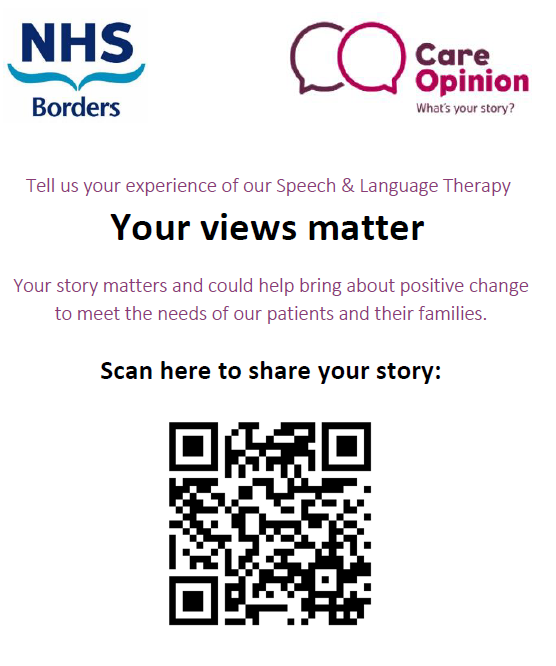
Alterantively, click here or freeephone: 0800 122 3135 to share your views.
Requesting Help
We’re here to help! Here’s how you can get in contact with us:
Click here to download our Request for Assistance form